Mostrando entradas con la etiqueta SPACEX. Mostrar todas las entradas

jueves, 6 de julio de 2017

SpaceX delivers for Intelsat 35 on heavyweight Falcon 9 mission

Credit: SpaceX

A SpaceX Falcon 9 rocket rumbled into the sky Wednesday from NASA’s Kennedy Space Center in Florida, flexing the rocket’s muscles and lofting a massive Intelsat satellite to orbit supporting wireless communications, television broadcasting and trans-Atlantic data relays.

Recovering from back-to-back countdown aborts earlier in the week, the two-stage, 229-foot-tall (70-meter) launcher lit nine Merlin 1D main engines and rocketed away from pad 39A at the Florida spaceport at 7:38 p.m. EDT (2338 GMT) Wednesday.

The slender white booster pivoted 1.7 million pounds of thrust from its main engines to steer eastward from the Space Coast, powering through the speed of sound as the kerosene-fueled first stage climbed above the stratosphere.

The nine-engine first stage shut down less than three minutes after liftoff, and the booster dropped away with the help of pneumatic pushers for a destructive plunge into the Atlantic Ocean.

Wednesday’s mission — the third SpaceX launch in 12 days — carried the Boeing-built Intelsat 35e communications satellite toward a perch in geostationary orbit 22,000 miles (36,000 kilometers) over the equator.


The commercial spacecraft weighed around 14,900 pounds (6,761 kilograms) at launch, the heaviest payload SpaceX has ever launched to such a high orbit. SpaceX committed all of the Falcon 9’s propellant to send the Intelsat satellite into the highest orbit possible, a ride designed to minimize the spacecraft’s own fuel consumption as it maneuvers into its final operating position.

The lift requirement left no fuel in the Falcon 9’s first stage to brake for landing, and the rocket was not equipped with landing legs or fins needed for an intact recovery.

Two firings of the upper stage’s single Merlin engine placed the Intelsat 35e spacecraft into a temporary oval-shaped orbit that ranges as far as 26,700 miles (43,000 kilometers) from Earth, according to Elon Musk, SpaceX’s founder and chief executive.

After a half-hour trek across the Atlantic, the Falcon 9 deployed Intelsat 35e around 32 minutes into the flight. An on-board camera beamed back a live view of the satellite receding into the blackness of space.

Intelsat confirmed later Wednesday night that the spacecraft radioed controllers via a ground station, suggesting the satellite was healthy following the fiery journey into space.

“Thanks Intelsat!” Musk tweeted. “Really proud of the rocket and SpaceX team today.”

Wednesday’s launch wrapped up a busy two weeks for SpaceX, in which the company deployed 12 satellites on three Falcon 9 rockets, including a previously-flown booster that sent the first Bulgarian-owned communications spacecraft into orbit June 23 from pad 39A.

Two days later, a Falcon 9 rocket took off from Vandenberg Air Force Base in California and successfully placed 10 next-generation Iridium voice and data relay satellites into orbit.

Credit: Walter Scriptunas II / Spaceflight Now

SpaceX intended to launch the Intelsat 35e mission Sunday, but software errors led to computer-triggered aborts at T-minus 10 seconds during back-to-back countdowns Sunday and Monday.

John Insprucker, the Falcon 9’s principal integration engineer who provided launch commentary on SpaceX’s webcast, said ground software halted Monday’s launch attempt because a measurement in the first stage avionics system did not match a pre-programmed limit in a ground database.

He said engineers confirmed the rocket was OK to fly without any changes to flight hardware, and officials modified the limit for Wednesday’s launch attempt.

The countdown Wednesday sailed through the T-minus 10 second software readiness check, and the rocket’s 32-minute ascent appeared to go smoothly.

The weight and destination orbit of Intelsat 35e maxed out the lift capability of the current configuration of SpaceX’s Falcon 9 rocket, according to Ken Lee, Intelsat’s senior vice president of space systems.

Besides the need to fly the rocket without recovery equipment, the Falcon 9’s upper stage was programmed to continue firing until its propellant tanks were nearly empty during the engine’s second burn. Rockets typically aim for a certain altitude and shut off their engines after reaching their target.

That left some uncertainty in where Intelsat 35e would end up, and Lee said in a pre-launch interview that the Falcon 9 rocket needed to send the satellite into an orbit stretching to a peak altitude of at least 19,405 miles (31,230 kilometers), per an agreement between SpaceX and Intelsat.

It turns out the Falcon 9 exceeded that requirement, placing its satellite passenger into a better-than-predicted orbit.

Intelsat 35e’s own rocket thruster will reshape its orbit in the next few weeks at a circular altitude of nearly 22,300 miles (35,800 kilometers). The satellite will raise the low point of its current transfer orbit, which currently swings as low as a few hundred miles up, and shift its ground track from the tropics to a path directly over the equator.

The satellite will park itself at 34.5 degrees west longitude, where it will remain in lock-step with Earth’s rotation during a 15-year lifetime.

The Intelsat 35e satellite is pictured preparing for shipment from its Boeing factory in El Segundo, California, to Cape Canaveral for launch. Credit: Intelsat

Hosting C-band and Ku-band communications payloads, Intelsat 35e is the fourth “Epic-class” relay satellite developed and launched by Intelsat, joining three previous versions orbited by European Ariane 5 rockets.

The latest generation of Intelsat satellites carry all-digital payloads, giving the company added flexibility in how it beams video, voice and data signals.

“In this version, what we do is we actually digitize all the traffic that comes to the spacecraft, and once you’re in a digital domain, you can do so many things,” Lee said in an interview with Spaceflight Now. “You can put it into the beams that you want to, or you can put it into all the beams, or any one of the beams for different connectivity.”

Intelsat 35e can process about 20 gigabits of data per second, routing television programming and mobile phone calls across its field-of-view. Intelsat said its newest satellite will primarily support wireless communications operators in Africa and Latin America, offer broadband services to cruise ships, and broadcast television to Caribbean customers for the French company Canal+.

Parts of Europe and North America will also fall inside Intelsat 35e’s communications coverage area.

Intelsat did not disclose the cost of the Intelsat 35e, but a spokesperson said the company’s Epic satellites typically cost between $300 million and $425 million each.

“Companies including Orange, INWI, Tele Greenland, Sonatel, Marlink, Speedcast, ETECSA and eProcess will be among the first to deploy services on the satellite once it is placed into service,” Intelsat said in a press release after Wednesday’s launch.

Intelsat 35e will replace the aging Intelsat 903 satellite at the 34.5 degrees west position. The older satellite, which launched on a Russian Proton rocket in March 2002, will be repositioned to a new coverage area before the end of the year, Intelsat said.

Artist’s illustration of the Intelsat 35e satellite in orbit, with its antenna reflectors and solar arrays extended. Credit: Intelsat

SpaceX will slow its rapid-fire launch campaign in the coming weeks as it gears up for the next Falcon 9 launch from the Kennedy Space Center. That mission is scheduled to blast off Aug. 10 with several tons of supplies and experiments for the International Space Station, followed by up to two more Falcon 9s later in August from California and Florida.

SpaceX’s three launches in a little more than 12 days, including two from the same pad, gave the company 10 successful Falcon 9 flights just past the halfway mark of 2017.

The launch record this year has already set a record for the most launches by SpaceX in a single year. The previous high was eight flights, achieved last year before a Falcon 9 rocket exploded at Cape Canaveral, destroying an Israeli-owned communications satellite, damaging SpaceX’s primary launch pad, and grounding the company’s rockets more than four months.

“Our priority is to reliably launch our customers,” said Gwynne Shotwell, SpaceX’s president and chief operating officer, in a statement following Wednesday’s mission. “SpaceX is able to attempt three launches for three customers in 12 days not only because we have the rockets, launch pads and droneships at the ready, but because we have the teams on the ground to get the job done.

“We are pleased with the progress we are making this year to launch and recover our rockets, which is key towards achieving full and rapid rocket reusability,” Shotwell said.

Before Wednesday’s expendable Falcon 9 launch, the last two missions featured booster landings at sea on separate SpaceX barges stationed in the Atlantic and Pacific oceans.

As for Intelsat, one of the world’s biggest and oldest commercial satellite operators, the company currently has no further missions booked with SpaceX, Lee said.

“Nevertheless, when there is an opportunity, we consider SpaceX to be a viable option for us, and we’ll engage them,” Lee said. “If the payload works out right with them, then we don’t have any reservation using SpaceX.”

martes, 21 de febrero de 2017

Historic launch pad back in service with thundering blastoff by SpaceX

Watch Falcon 9 lift off from Kennedy Space Center launch pad 39A on a space station resupply mission. The rocket’s first stage then returned to land at neighboring Cape Canaveral Air Force Station.


Credit: SpaceX

SpaceX sent a cargo capsule with nearly 5,500 pounds of experiments and supplies on a three-day trip to the International Space Station on Sunday, firing the automated spaceship through low-hanging clouds and into orbit from the same launch pad where Apollo astronauts began voyages to the moon.

A kerosene-fueled 213-foot-tall (65-meter) Falcon 9 rocket powered the cargo freighter into space, soaring on a northeasterly course from launch pad 39A at NASA’s Kennedy Space Center at 9:39 a.m. EST (1439 GMT) atop 1.7 million pounds of thrust.

A few minutes later, the first stage booster nailed an on-target landing back at Cape Canaveral in the first such return to the launch base in daylight.

The launch — the first SpaceX has conducted from pad 39A — was timed for the Dragon cargo carrier align its course with the orbital path of the space station.

The historic launch complex, situated about a half-mile (750 meters) from the Atlantic Ocean, was the departure point for 94 missions before Sunday.


Originally constructed in the 1960s for the Apollo moon program, pad 39A hosted 12 Saturn 5 blastoffs on test flights, all of the moon landing missions and the uncrewed launch of NASA’s Skylab space station from 1967 through 1973.

NASA’s fleet of space shuttles launched from the pad 82 times, including the first and last flights of the program in 1981 and 2011.

The launch pad has remained dormant since the last shuttle mission took off July 8, 2011, and SpaceX signed a 20-year lease to take over the facility as a commercially-operated launch complex in 2014.

“It was really awesome to see 39A roar back to life for the first time since the shuttle era, and it was extremely special that this first launch off of 39A was a Dragon mission for NASA heading to the space station,” said Jessica Jensen, a Dragon mission manager who spoke with reporters after Sunday’s launch.

Credit: Walter Scriptunas II / Scriptunas Imagem

NASA decided it no longer needed pad 39A after the shuttle’s retirement. Nearby launch pad 39B, previously built for Apollo and shuttle flights, will be home to NASA’s Space Launch System, a government-owned heavy-lift rocket that will launch astronaut crews on deep space expeditions.

“This pad would have just sat here and rusted away in the salt air had we not had the use agreement with SpaceX to continue to enable commercial operations for our nation,” said Bob Cabana, director of the Kennedy Space Center.

The concrete foundation of pad 39A dates back to the Apollo era of the 1960s, while the 347-foot-tall (106-meter) fixed service structure and lightning tower were emplaced before the first shuttle launch.

“It gives me a little bit of chills when I walk out there and see stuff that’s left over from Apollo,” said Hans Koenigsmann, SpaceX’s vice president of flight reliability.

Since SpaceX took over, changes to pad 39A have included the construction of the new rocket hangar outside the south gate to the facility, where space shuttles and Saturn 5 moon rockets arrived on top of tracked crawler-transporters after rollout from the nearby Vehicle Assembly Building.

The hangar can accommodate five Falcon 9 rocket cores at a time, according to SpaceX.

“We’ve taken good care of this pad during the refurbishment and the rebuild,” said Gwynne Shotwell, SpaceX’s president, in remarks to reporters at the launch site Friday. “We saved precious things that needed to be saved. We’ve upgraded things to make them usable in the contemporary era. It’s hard to express how excited I am to be here, just two-and-a-half years after we got the lease.”

SpaceX sped the pad to completion after a rocket explosion damaged the company’s other Cape Canaveral launch facility — Complex 40 a few miles to the south — and grounded Falcon 9 flights until the booster returned to service last month in a mission from California.

Other additions at the pad include the installation of RP-1 kerosene fuel tanks and the construction of the massive transporter-erector, which is sized to accommodate SpaceX’s powerful triple-body Falcon Heavy rocket when it debuts later this year.

An access arm to allow astronauts to board SpaceX’s Crew Dragon capsule, a human-rated ship in development to launch people as soon as next year, will be added to pad 39A in the coming months.

SpaceX tested many of the launch pad’s new parts Feb. 12 during a countdown rehearsal in which the Falcon 9 rocket was fueled before a hold-down engine firing.

Engineers returned the two-stage launcher to SpaceX’s hangar, added the Dragon spacecraft, then rolled the fully-assembled vehicle back to the pad Thursday for further tests and the loading of final cargo.

But some features of the launch pad — like the quick partial retraction of the transporter-erector “strongback” umbilical tower at liftoff — were not been exercised until Sunday.

“This is a huge deal for us,” Jensen said. “We completely modernized the way the pad is built, so yeah, it’s super exciting, and you’re always a little bit nervous. We’ve run tons of tests to ensure that the hold-downs released properly, and the strongback throws back in a different way than it used to at pad 40.

“We’ve had tons of ground tests, but we’ve never mated an actual rocket with a payload on top for that,” she added. “So to watch it happen for the first time was just amazing.”

The mission’s takeoff was delayed from Saturday after SpaceX managers ordered a last-minute abort to investigate unexpected readings from the Falcon 9 upper stage engine’s backup steering mechanism.

Ground crews lowered the rocket at pad 39A overnight to replace parts of a redundant actuator on the second stage’s Merlin engine thrust vector control system, which directs the powerplant’s thrust to point the launcher in the right direction.

The rocket was raised upright again around six hours before launch, and the SpaceX launch team, working from a control center around 13 miles (21 kilometers) to the south, oversaw filling of the Falcon 9 with super-chilled, densified kerosene and liquid oxygen propellants in the final hour of the countdown.

Scattered rain showers around the Kennedy Space Center threatened to hold up the launch, but all weather criteria toggled “green” in time for the day’s instantaneous launch opportunity.


Eight minutes after it blasted off, the Falcon 9’s first stage booster made a dramatic vertical landing at a recovery site around 9 miles (15 kilometers) south of pad 39A at Cape Canaveral Air Force Station, the first time a SpaceX rocket has touched down on land in daylight.

An overcast deck of clouds prohibited ideal viewing of the launch and return, but the rocket’s nine Merlin engines sent a wave of window-rattling sound across the spaceport on the trip up, and twin sonic booms heralded the booster’s final descent as it became visible to spectators just before touchdown.

SpaceX plans to inspect the landed rocket and prepare it for another flight some time in the future. The company now has eight flown first stage boosters in its inventory, recovered after landings at Cape Canaveral and at sea. Seven of those are considered flight-worthy, according to Jensen.

The SES 10 satellite, a commercial broadcasting spacecraft, is in Cape Canaveral preparing for a launch on a Falcon 9 rocket in March that will fly with a previously-used first stage booster for the first time.

Once in orbit, the Dragon supply freighter unfurled two power-generating solar array wings to a span of 54 feet (16 meters). The spacecraft was scheduled to open a navigation bay later Sunday and fine-tune its course toward the space station with a series of thruster firings ahead of its arrival at the outpost early Wednesday.

French-born European Space Agency flight engineer Thomas Pesquet will grapple the approaching cargo craft around 6 a.m. EST (1100 GMT) Wednesday with the space station’s robotic arm after the automated ship flies within about 30 feet, or 10 meters, of the research complex.

The Canadian-built robot arm, under the command of ground controllers in Houston, will transfer the gumdrop-shaped logistics freighter to a berthing port on the station’s Harmony module a few hours later.

Once bolts drive closed to firmly connect the SpaceX cargo craft to the space station, astronauts inside the orbiting science lab will open hatches and begin unpacking the 3,373 pounds (1,530 kilograms) of supplies, experiments and provisions inside.

Meanwhile, the robot arm and the station’s two-armed Dextre handyman will remove three payloads — totaling more than 2,100 pounds (more than 950 kilograms) — from the Dragon’s unpressurized trunk for placement on platforms on the outpost’s huge structural truss.


The Dragon spaceship deploys from the Falcon 9 rocket’s upper stage in orbit. Three unpressurized payloads are seen inside the Dragon capsule’s trunk. Credit: SpaceX


One of the payloads is NASA’s $92 million Stratospheric Aerosol and Gas Experiment 3, or SAGE 3, an ozone monitor that comes with a separate ESA-built “hexapod” mounting plate designed to point the instrument at Earth’s limb, or horizon, at sunset and moonset.

The sunlight and moonlight passing through the layers of the upper atmosphere will help tell scientists about the condition of the ozone layer and allow researchers to track pollutants and particles suspended high above Earth.

SAGE 3, developed by NASA’s Langley Research Center in Virginia, is the latest in a series of ozone measurement sensors developed by NASA since 1979. Previous space missions studying ozone showed a decline in the distribution of the gas over Earth’s poles, and researchers tied the ozone depletion to chlorofluorocarbon, a chemical used in cleaning agents, refrigeration and air conditioning.

An international treaty called the Montreal Protocol that went into force in 1989 banned chlorofluorocarbons, and scientists have observed the depletion stop and watched the ozone layer begin to recover.

“How does SAGE 3 fit into that? We’re going to make measurements from the space station that show the recovery is on track,” said Michael Cisewski, SAGE 3 project manager at NASA. “I think that, from a science perspective, it doesn’t get any better than that.”

“SAGE 3 will also measure other important stratospheric gases and atmospheric aerosols, which are components of pollution that also impact the radiation balance of our planet,” said Michael Freilich, director of NASA’s Earth science division.

The other experiment package carried inside the Dragon capsule’s external bay is sponsored by the U.S. military’s Space Test Program, hosting more than a dozen investigations for NASA and the Defense Department.

Among STP-H5’s investigations are NASA’s Raven autonomous space navigation demonstration designed to support future satellite servicing missions and NASA’s Lightning Imaging Sensor.

The Raven payload is made up of three sensors — optical, infrared and laser trackers — to autonomously follow visiting cargo vessels arriving and departing from the space station.


The Raven payload seen before launch. Credit: NASA/Goddard Space Flight Center

Benjamin Reed, deputy director of NASA’s satellite servicing program at Goddard Space Flight Center, called Raven a “three-eyed” instrument.

“The Raven module will be observing visiting vehicles as they approach in all three wavelengths,” Reed said. “We will be generating range, bearing and pose estimates of those visiting vehicles on-board with sophisticated algorithms and on-board processing, based on the input that the sensors are receiving.”

Raven is a follow-up to a NASA experiment that tried out satellite refueling techniques using a boilerplate test panel outside the space station.

The satellite servicing demonstrations will refine the technologies needed for future robotic missions to refuel, refurbish, upgrade and reposition satellites, beginning with NASA’s Restore-L spacecraft in development for launch in 2020 to gas up the aging Landsat 7 environmental observatory in orbit.

Raven will try out the navigation equipment needed for Restore-L, and missions like it, to approach another object in orbit without any input from the ground and latch on to it, even if the target was never designed for a docking.

Landsat 7 was launched in 1999 before any such refueling mission was ever proposed, so it is not equipped with markings or a docking port.

“These technologies are quite difficult, and that is why NASA is taking the lead, pushing the envelope, (and) doing the hard work first,” Reed said. “Once we have developed it on missions like Raven, we will then transfer that technology to U.S. industry that is interested in taking this on commercially.”

The Lightning Imaging Sensor, managed by NASA’s Marshall Space Flight Center in partnership with the University of Alabama in Huntsville, will take pictures and log lightning strikes from the space station’s perch nearly 250 miles (400 kilometers) above Earth.

Based on a spare camera made for the U.S.-Japanese Tropical Rainfall Measuring Mission, the instrument cost $7 million to refurbish and will detect lightning day and night in a belt between 56 degrees north and south latitude.

“Lightning actually occurs somewhere on Earth some 45 times every single second,” Freilich said. “Understanding the processes which cause lighting and the connections between lightning and subsequent severe weather events like convective storms and tornadoes … are keys to improving weather predictions and saving lives and property in this country and throughout the globe.”

A bevy of biological experiments are packed inside the Dragon supply ship.

Scientists are sending 40 mice into orbit to examine how bone fractures heal in the absence of gravity, and search for the biological reasons why most animals, including humans, cannot regrow lost limbs.

“We’re trying to understand what happens in the body as the bones start healing,” said Rasha Hammamieh, the rodent research project’s chief scientist from the U.S. Army Center for Environmental Health Research.

The military is co-sponsoring the bone health experiment, with an eye toward learning lessons that could be applied to helping injured soldiers recover from catastrophic bone injuries.

There are also implications for civilians, such as elderly patients with osteoporosis.

“Up in space, you lose bone,” said Melissa Kacena, co-investigator for the bone experiment and an associate professor of orthopedic surgery, anatomy and cell biology, and biomedical engineering at Indiana University. “In fact, astronauts lose about 1 to 3 percent of their bone density in a month. Someone with advanced osteoporosis loses closer to 1 percent per year.”

Kacena added that scientists want to test drugs on rodents that might be able to “rebuild your bone systematically, so it could have applications not only for bone healing, but also for osteoporosis.”

Astronauts on the space station will euthanize the mice and return them to Earth for comparison with a control group that remained on the ground.

Bacterial and stem cell researchers also had a stake in Sunday’s launch.

“We are excited to put MRSA, which is a superbug, on the International Space Station and investigate the effects of microgravity on the growth and mutation patterns of these bugs,” said Anita Goel, chairman and science director of Nanobiosym, which developed the experiment with the Center for the Advancement of Science in Space.

“I have this hypothesis that microgravity will accelerate the mutation patterns. If we can use microgravity as an accelerator to fast forward and get a sneak preview of what these mutations will look like, then we can esssentially build smarter drugs back on Earth.”

A science team led by a Mayo Clinic biologist is sending human adult stem cells to the space station, pursuing research that could help transplant patients and stroke victims.

“We know stem cells grow differently using simulated microgravity,” said Abba Zubair, medical and scientific director of the Cell Therapy Laboratory at the Mayo Clinic in Jacksonville, Florida. “Primarily, our focus is to see if microgravity actually can help stem cells to expand faster, so that we can grow more of them to bring back to use for human application.”

The Dragon spaceship will remain at the space station until around March 21, when it will detach and head for a re-entry and parachute-assisted splashdown in the Pacific Ocean, where SpaceX will safe the capsule, transfer it back to port, and begin removing the returned cargo.

The resupply mission is SpaceX’s tenth cargo launch to the space station. The company has two multibillion-dollar cargo contracts with NASA covering at least 26 round-trip missions.

SpaceX’s next launch is scheduled within the next two weeks — perhaps as soon as Feb. 28 — with the EchoStar 23 communications satellite. That flight will also blast off from pad 39A.

http://spaceflightnow.com

miércoles, 4 de enero de 2017

SpaceX failure probe complete; flights to resume Sunday from California

File photo. Credit: NASA

After an exhaustive investigation, SpaceX engineers have identified the most likely cause of the spectacular explosion of a Falcon 9 rocket during a pre-launch test Sept. 1 that destroyed the booster and its $195 million satellite payload, the company announced Monday.

SpaceX engineers believe the Cape Canaveral Air Force Station mishap was triggered by the failure of a high-pressure helium tank, one of three used to pressurize the second stage liquid oxygen tank.

Putting corrective actions in place, the company said Monday it plans to resume flights with a launch from Vandenberg Air Force Base northwest of Los Angeles on Jan. 8 to boost 10 Iridium NEXT satellite telephone relay stations into orbit.

It is not yet known when SpaceX plans to resume flights from Cape Canaveral. Launch complex 40 at the Florida Air Force station was heavily damaged in the Sept. 1 mishap, and the company plans to use a repurposed space shuttle launch pad at the nearby Kennedy Space Center for its next Falcon 9 flight from Florida.

Sources indicate the first flight from Kennedy will be another commercial mission. The next SpaceX flight to deliver cargo to the International Space Station, the company’s 10th under contract to NASA, is expected to take place some time after the commercial mission.

SpaceX’s Falcon 9 rocket uses super-cooled, or “densified,” liquid oxygen and RP-1 kerosene fuel to provide additional performance during ascent. To achieve and maintain the desired low temperatures, propellant loading begins just 35 minutes before launch.

To push propellants to the rocket’s engines, the Falcon 9 uses highly pressurized helium stored in aluminum bottles, wrapped in a tough, insulating carbon composite material. The bottles, known as composite overwrap pressure vessels, or COPVs, are mounted inside the propellant tanks, submerged in frigid liquid oxygen and chilled kerosene.

On Sept. 1, about five minutes before a planned test firing of the Falcon’s nine Merlin 1D first stage engines — a routine pre-launch test for SpaceX — the second stage suddenly exploded in a spectacular conflagration that was caught on video and widely seen around the world.

The rocket and it’s $195 million payload, a commercial communications satellite, were destroyed, causing heavy damage to launch complex 40 at the Cape Canaveral Air Force Station. Just 93 milliseconds elapsed from the first signs of trouble to the explosion.

“Investigators scoured more than 3,000 channels of video and telemetry data covering a very brief timeline of events,” SpaceX said in a statement posted to its website. “Because the failure occurred on the ground, investigators were also able to review umbilical data, ground-based video, and physical debris.

“To validate investigation analysis and findings, SpaceX conducted a wide range of tests at its facilities in Hawthorne, California and McGregor, Texas.”


SpaceX is generally tight-lipped when it comes to technical details, and the statement posted Monday provided only a general overview of the team’s findings. It said accident investigators “concluded that one of the three composite overwrapped pressure vessels (COPVs) inside the second stage liquid oxygen (LOX) tank failed.”

“Specifically, the investigation team concluded the failure was likely due to the accumulation of oxygen between the COPV liner and overwrap in a void or a buckle in the liner,” the company said.

Investigators believe those extremely low temperatures may have caused some of that trapped oxygen to solidify. In any case, when the tank was pressurized, trapped oxygen pushing against the carbon overwrap fibers likely generated friction “leading to ignition and the subsequent failure of the COPV.”

Liquid oxygen has a temperature of around minus 298 degrees Fahrenheit, but SpaceX chills the propellant to around minus 340 degrees for use aboard the Falcon 9. The RP-1 kerosene fuel, which normally is stored at a room temperature 70 degrees, also is chilled. The lower temperatures increase the propellants’ density.

A rocket engine’s thrust is directly proportional to the rate propellants are consumed and expelled. By “densifying” the Falcon 9 propellants, more fuel can be stored and pumped through the engines, increasing performance.

While earlier rockets, including the Titan 2 booster used to launch NASA’s Gemini spacecraft in the 1960s, used propellant cooling to increase density, and thus engine performance, the upgraded Falcon 9 is believed to be the first utilizing super-cooled cryogenic oxygen.

SpaceX founder Elon Musk said in 2015, when propellant cooling was first implemented in the Falcon 9, that “we’re sub-cooling the propellant, particularly the liquid oxygen, close to its freezing point, which increases the density quite significantly.”

Failure investigators “identified several credible causes for the COPV failure, all of which involve accumulation of super chilled LOX or SOX (solidified oxygen) in buckles under the overwrap,” the company said in its statement.

“The corrective actions address all credible causes and focus on changes which avoid the conditions that led to these credible causes. In the short term, this entails changing the COPV configuration to allow warmer temperature helium to be loaded, as well as returning helium loading operations to a prior flight proven configuration based on operations used in over 700 successful COPV loads.”

The company did not provide any details about those earlier helium loading procedures but said it plans to redesign the helium bottles in the long term “to prevent buckles altogether, which will allow for faster loading operations.”

The Sept. 1 failure was the second involving the Falcon 9’s second-stage helium pressurization system.

During a June 2015 launch to deliver supplies to the space station, a strut holding a second-stage helium tank in place inside the liquid oxygen tank failed, allowing the helium bottle to shoot up and crash into the top of the oxygen tank, triggering a catastrophic rupture.

It was SpaceX’s first outright Falcon 9 failure in 19 launchings dating back to the rocket’s maiden flight in June 2010. After taking steps to ensure all internal struts met design specifications, SpaceX launched nine successful missions in a row before the Sept. 1 launch pad disaster, all of them using densified propellants.

http://spaceflightnow.com

jueves, 7 de abril de 2016

Static fire complete in run-up to launch of SpaceX supply ship

SpaceX’s Falcon 9 rocket is pictured inside the hangar at Cape Canaveral’s Complex 40 launch pad before rollout leading up to Tuesday’s static fire test. Credit: SpaceX

Stephen Clark

SpaceX’s Falcon 9 rocket is pictured inside the hangar at Cape Canaveral’s Complex 40 launch pad before rollout leading up to Tuesday’s static fire test. Credit: SpaceX

SpaceX ran a Falcon 9 rocket through a customary preflight checkout Tuesday, filling it with super-cold propellants and firing its nine Merlin first stage engines in preparation for liftoff Friday on a resupply run to the International Space Station.

The static fire test Tuesday night at Cape Canaveral’s Complex 40 launch pad is a critical milestone ahead of Friday’s scheduled takeoff of the (Falcon 9 rocket with SpaceX’s Dragon supply ship with 6,913 pounds (3,136 kilograms) of cargo for the space station and its six-person crew.

The cargo load includes live mice for an experiment studying how long-duration spaceflight can waste muscle mass, and an expandable module made by Las Vegas-based Bigelow Aerospace to be attached to the space station for a technology demonstration that could inform the designs of future inflatable space habitats.

SpaceX announced the completion of the static fire on social media Tuesday night. Engineers plan to review data from the test before convening a launch readiness review later this week to formally approve the start of final launch preps.

Liftoff is set for 4:43 p.m. EDT (2043 GMT) Friday, kicking off a one-and-a-half-day pursuit of the massive research complex before arrival early Sunday.

The space station’s Canadian-built robotic arm, under the control of astronauts aboard the outpost, will grapple the approaching Dragon cargo capsule around 7 a.m. EDT (1100 GMT) Sunday, assuming an on-time launch Friday.

The cargo delivery mission is SpaceX’s eighth operational resupply flight to the space station. Based in Southern California, SpaceX has at least 18 more space station cargo flights on contract after Friday’s launch.

NASA selected SpaceX and Orbital ATK to ferry supplies and experiments to the space station in 2008. Their multibillion-dollar contracts currently extend through 2018.

The space agency has picked SpaceX, Orbital ATK and newcomer Sierra Nevada Corp. for commercial resupply missions to the space station from 2019 through 2024.

Credit: SpaceX

Friday’s launch will mark the 23rd flight of a Falcon 9 rocket, and the third launch of an upgraded version of the two-stage booster producing higher thrust and burning a super-chilled mixture of kerosene and liquid oxygen propellants.

It will also be SpaceX’s first cargo flight to the space station in nearly a year.

The last time a Dragon spaceship flew to the complex was in April 2015, two months before a Falcon 9 rocket disintegrated minutes after blastoff on the Dragon capsule’s next space station resupply mission.

The launch failure grounded the Falcon 9 rocket for six months, and kept Dragon missions from flying for nearly a year.

The preliminary forecast for Friday’s instantaneous launch opportunity calls for an 80 percent chance of acceptable weather.

A weak cold front is forecast to move over Cape Canaveral on Thursday, bringing gusty winds and rain showers to the area. But conditions are expected to improve Friday.

“On Friday, skies are expected to clear behind the boundary with only a few lingering cirrostratus clouds associated with the jet stream digging in along the eastern seaboard,” the U.S. Air Force’s 45th Weather Squadron wrote in an official launch forecast issued Tuesday. “Surface winds will remain off-shore and elevated throughout the day on Friday, gusting into the mid-twenties.”

The primary weather concern Friday is liftoff winds.

The outlook for launch time Friday calls for a few clouds at 35,000 feet, west winds at 18 to 23 mph, and a temperature of 75 degrees Fahrenheit.

If liftoff is delayed to Saturday, there is a 90 percent chance weather conditions will be favorable at launch time.

http://spaceflightnow.com

martes, 1 de marzo de 2016

SPACEX , LAUNCH SES-9


livestream.com


   SpaceX

Date


 SpaceX

Unfortunately upper-level winds continue to exceed acceptable limits and are expected to get worse as we approach tonight’s launch window, so we are forgoing today’s launch attempt. Winds are forecast to exceed acceptable limits through Thursday. Our team will continue working with the Air Force’s Launch Weather Officer to evaluate the best available opportunity for flight in the coming days.


SES-9 

Science & Technology / Space · Less event details

Date


Tue, Mar 1 2016 8:35 PM ART — Tue, Mar 1 2016 10:05 PM ART

About

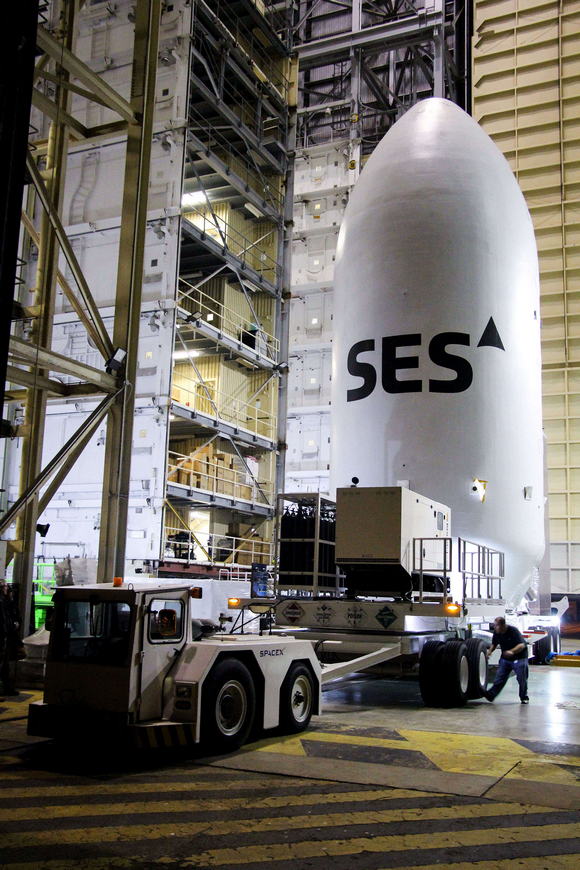
SpaceX’s Falcon 9 rocket will deliver SES-9, a commercial communications satellite for SES, to a Geostationary Transfer Orbit (GTO). SES is a world-leading satellite operator that provides satellite-enabled communications services to broadcasters, Internet service providers, mobile and fixed network operators, and business and governmental organizations worldwide using its fleet of more than 50 geostationary satellites. SpaceX is targeting an evening launch of SES-9 from Space Launch Complex 40 at Cape Canaveral Air Force Station, Fla. The approximately 90-minute launch window opens on February 25 at 6:46 pm ET. The satellite will be deployed approximately 31 minutes after liftoff.


   SpaceX,


  SpaceX,


Falcon 9 with SES-9 satellite are vertical on Pad 40 at Cape Canaveral Air Force Station, Fla.

   SpaceX


Official SpaceX mission patch for the SES-9 mission.

http://livestream.com

miércoles, 24 de febrero de 2016

SPACEX READY FOR NEXT ATTEMPT TO LAUNCH AND LANDING

popsci.com


Por Sarah Fecht


SpaceX is slated to launch a broadcasting satellite into orbit this week, and the Falcon 9 rocket is getting all fired up--literally. On Monday, the company briefly lit the first stage engines in a static test fire, and so far everything seems to be up to snuff.


If the weather holds out, the mission's launch window will begin on Wednesday at 6:46pm Eastern. Meteorologists are saying there's a 60 percent chance that the conditions will be okay for liftoff.


The rocket's payload, a nearly 12,000-pound satellite made by the satellite operator SES, will bolster communications and television broadcasting in the Asia-Pacific region.


If all goes well, Wednesday's mission will be the second launch of SpaceX's new-and-improved Falcon 9 rocket design, upgraded to carry more fuel and have more thrust.

It'll need that extra fuel, too. After the launch, SpaceX will attempt to land the first stage of the rocket on a barge in the ocean. However, landing on a swaying sea platform has proven to be difficult, and the odds of succeeding are even lower this time around. After a SpaceX rocket exploded last year, the satellite's launch was delayed for months. To make up for lost time, the Falcon 9 will carry the massive satellite into a higher orbit that will reduce the time it takes for the SES-9 satellite to get into the right position to begin operating.

Launching the satellite higher means the rocket will be coming down faster, and with less fuel to slow its descent. However, if SpaceX does manage to pull off the landing despite all those additional challenges, it'll make the success even sweeter.